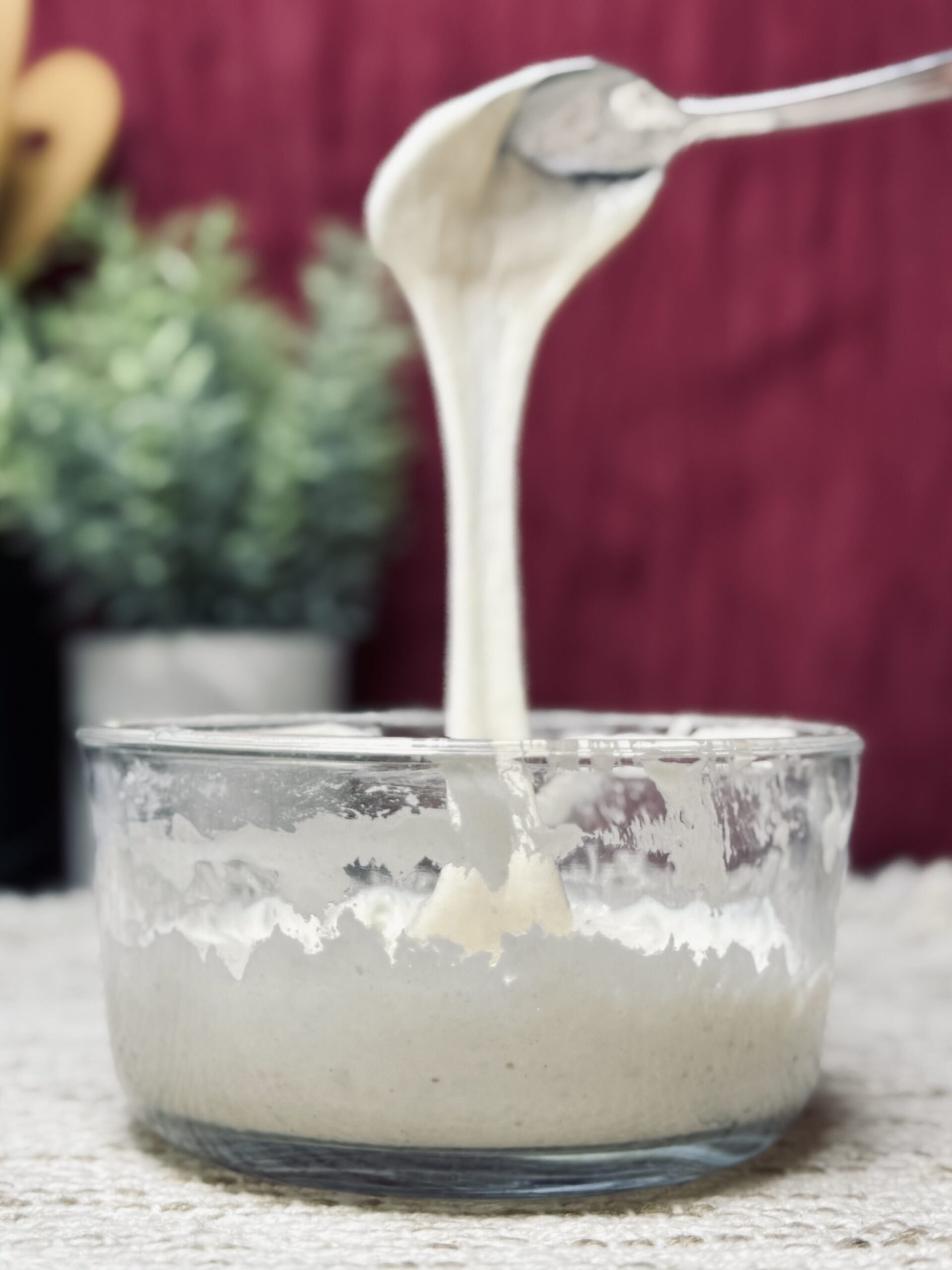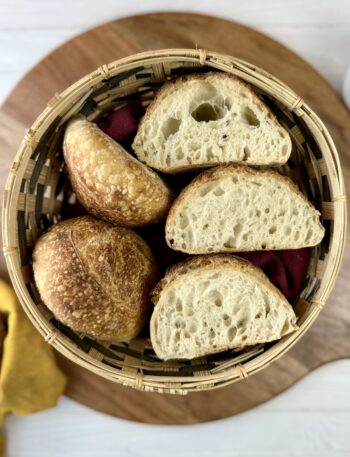

Sugar supports yeast fermentation and contributes to a beautiful, deep crust color. Without sugar, fermentation wouldn’t be as strong or effective as it needs to be to raise bread dough. While it can sweeten the flavor of bread, it can also neutralize the acids that cause sourness. It can be a superhero by supporting yeast and enhancing flavor, but it can also act as a villain by disrupting the balance of fermentation, even to the point of stopping it altogether. Sugar is a double-edged sword—a tool we must learn how to use just right. So, let’s talk about it!
What’s The Point Of Sugar Anyway?
A lot of people think of sugar as simply a sweetener—but it is so much more!
The most important function of sugar in dough is to feed microorganisms, specifically yeast. Without sugar, fermentation wouldn’t occur, and without fermentation, bread wouldn’t rise—and what’s the point of a bread that doesn’t rise?
If there was one thing we absolutely need sugar for, this would be it. Food for yeast. Yet, sugar does more than fuel fermentation.
Sugar can also: create osmotic stress, sweeten, and halt fermentation altogether, depending on the amount added to the dough. It is a versatile tool to achieve desired results in any kind of recipe.
Importantly, sugar also contributes to a deep crust color. In bread made from basic ingredients, a darker crust indicates more broken down sugars, and, therefore, a better fermentation. In fact, if the bread is begging to burn in the oven before it is fully cooked, you can be sure that it is going to be light as a feather.
Okay, but sourdough bread clearly doesn’t need any added sugar. After all—it only requires flour, water, salt, and sourdough starter.
Can’t you see it? We already have the sugar we need contained within these ingredients.
Starch: Flour’s Natural Sugar
Flour already contains the sugars necessary for fermentation through its starch content. You see, starches are complex carbohydrates, which are essentially just complex sugars.
Now, yeast cannot digest starches without intervention. In order for yeast to feed, starches must be broken down into simple sugars which yeast can more easily digest. This is where enzymes come in.
Enzymes, also naturally present in the flour, begin working as soon as water and flour collide. One enzyme in particular, amylase, has the specific job of breaking down these complex carbohydrates so that yeast can feed. As amylase works, more and more sugars become available for yeast, and bread dough begins to rise.
Imagine yeast as tiny creatures that need food to survive, just like us. Their favorite meal is sugar, which they devour and transform into gas. This gas acts like blowing up a balloon, making the bread dough rise light and fluffy. Enzymes are yeasts little helpers, sneaking in to break down complex sugars into simpler forms so that yeast can enjoy their meal effortlessly. Together, these components create the delicious, lofty bread we love.
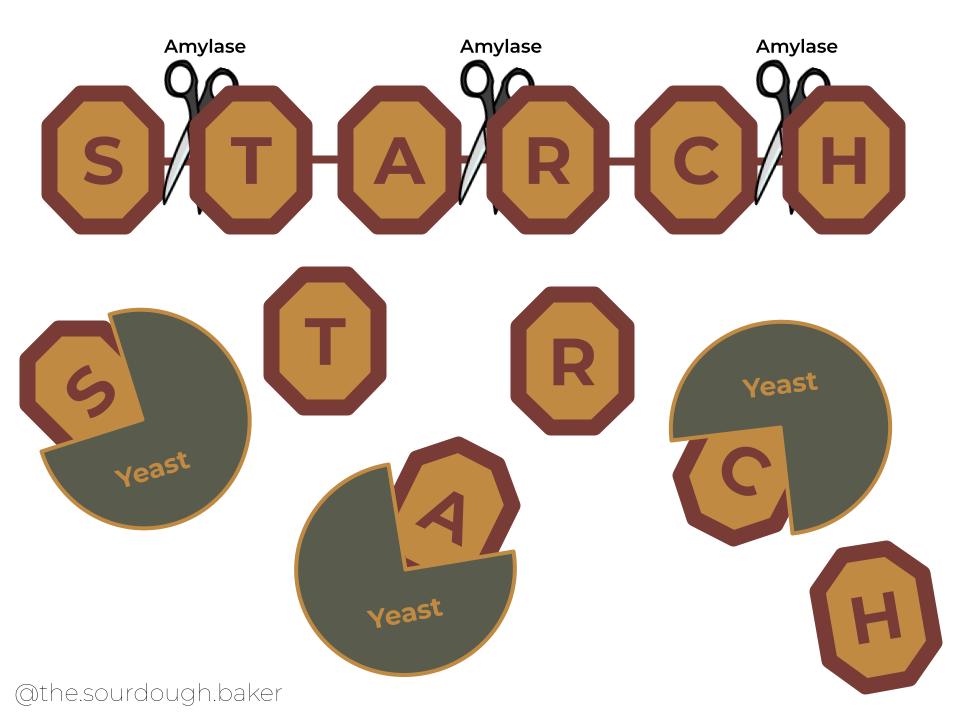
This is why fermentation can occur in bread dough even without adding any sugar. Nature has its own, beautiful process that does not require our intervention. Without starch, and without enzymes to break it down, fermentation wouldn’t be possible.
Knowing this, there are a few things we can think about when choosing our flour and our process.
- Starch content makes a difference. If a flour has more starch, it has more potential food for yeast, and the potential for a better fermentation. This can result in a bread that is lighter and airier than a bread made from a flour with a lower starch content.
- The activity of the enzyme, amylase, that breaks down these starches is important. It is the main factor that determines fermentation speed and capability. At the mill, amylase activity is measured using the Hagberg falling number, which is recorded in seconds. Some brands may include falling number on the packaging, while others may not. A standard falling number ranges between 280 to 370, though some malted flours may have a falling number as low as 250. A falling number below 280 suggests excessive amylase activity, leading to overly rapid fermentation. Conversely, a falling number above 370 indicates insufficient amylase activity, resulting in a sluggish fermentation process.
- Autolyse increases the availability of sugars for yeast before they are added to bread dough. This provides the dough with a sufficient food supply, ensuring a more rapid start to fermentation. While we don’t have to have autolyse to make good bread, this simple step can make a valuable impact.
Now, sometimes it is actually helpful, desired, or even necessary to add sugar to our sourdough starter or to our bread dough. So, how do different amounts of sugar affect fermentation, flavor development, and crust color?
The Cause + Effect Of Varying Amounts Of Sugar In Bread Dough
Less Than 10%: Just A Pinch
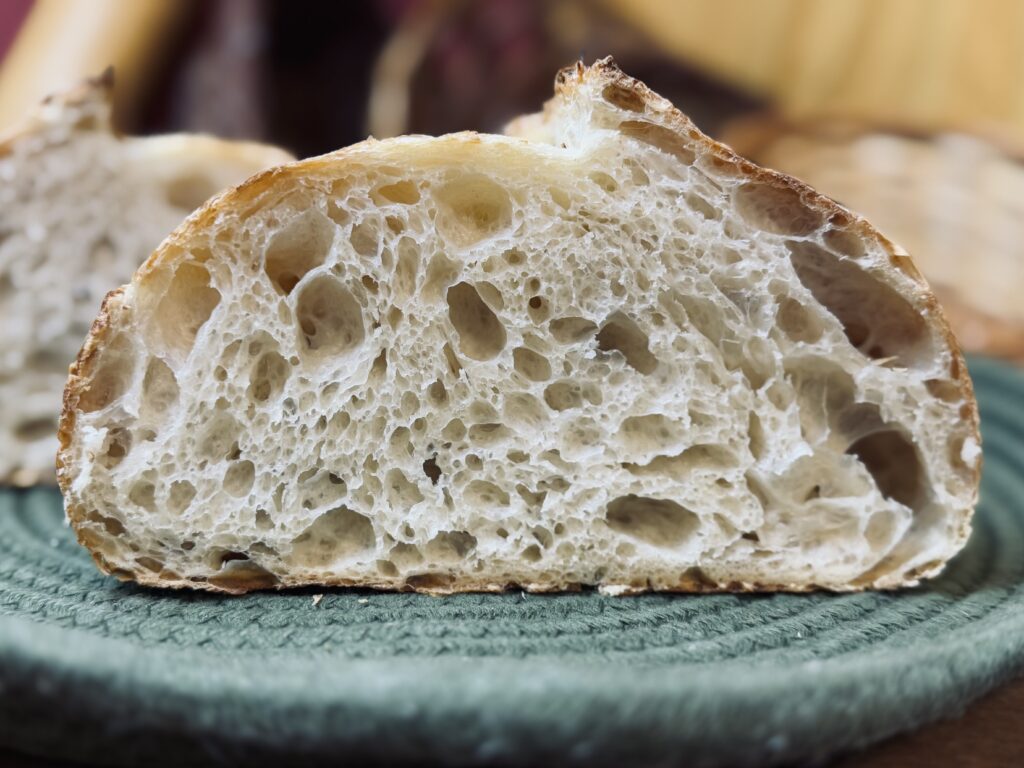
When you add less than 10% (baker’s math) sugar to your starter or to your bread dough, you are providing instant food for your microorganisms. This amount isn’t enough to cause a noticeable flavor difference in your bread, but you may notice a texture difference, and you will certainly notice an increase in how high the starter or dough rises.
Since microbes, especially yeast, can get started breaking down sugars immediately, they begin producing CO2 more rapidly. As long as your dough has a gluten network to capture the air, that air will make the texture of your dough feel more like a cloud in your mouth.
Adding a little bit of sugar can be especially helpful if you have not already done an autolyse or a premix before adding your sourdough starter. Since amylase hasn’t had time to get a head start on its work, the sugar can provide the instant food the dough is already missing. However, it is important to note that without a gluten network (which can be observed through a dough’s windowpane) the dough will not be able to retain the extra air being produced from added sugars in the early stages of fermentation, meaning it is important to consider the method at hand as well.
Observe: Have you ever noticed that many recipes using commercial yeast over sourdough almost always include a very small amount of sugar? Sourdough is slow moving, leaving plenty of time for amylases to break down necessary sugars before they are needed (in most cases). However, with commercial yeast, a large portion of yeast are being inoculated into the dough for a very rapid fermentation. Adding quick/instant food can result in a better/more rapid fermentation for these kinds of breads.
Try it: Try adding a little bit of sugar to your basic sourdough bread recipe, typically made from just flour, water, salt, and sourdough starter. Take the amount of flour in your recipe (measured in grams) and multiply that number by 0.05 to get a starting point for the amount of sugar you might add to your dough (in grams). You can add a little more or a little less if you like. See if you notice a difference in the speed of fermentation and the texture of your final dough.
10-15%: Osmotic Stress
When you add 10-15% sugar (baker’s math) to your starter or bread dough, a condition called osmotic stress occurs, affecting the rate at which bacteria reproduce. The effect created by this sugar level may slightly slow yeast production since it draws out moisture and dehydrates yeast cells; however, it’s not enough to significantly affect fermentation. The main benefit of this specific percentage of sugar is its osmotic stress on bacteria, whose reproduction is drastically slowed down.
Slowing down bacterial reproduction means slowing down the acids they produce, which are responsible for sourness in sourdough bread. It’s not that the sweet flavor of the sugar is balancing the acidic flavor from acids, its that the sugar itself is prohibiting bacteria from reproducing, minimizing the acids they produce and, therefore, the sour flavor they can cause.
This technique of creating osmotic stress is the entire purpose of a sweet stiff starter, which is used to reduce sour flavor in sweet breads. The sugar in the sweet stiff starter works together with the lower hydration of the starter to hinder bacteria, leading to less acid output that is transferred over to the bread dough from the sourdough starter. This is combined with additional sugar in the sweet dough, which continues to inhibit bacterial production, and a bread with minimal sourness is made!
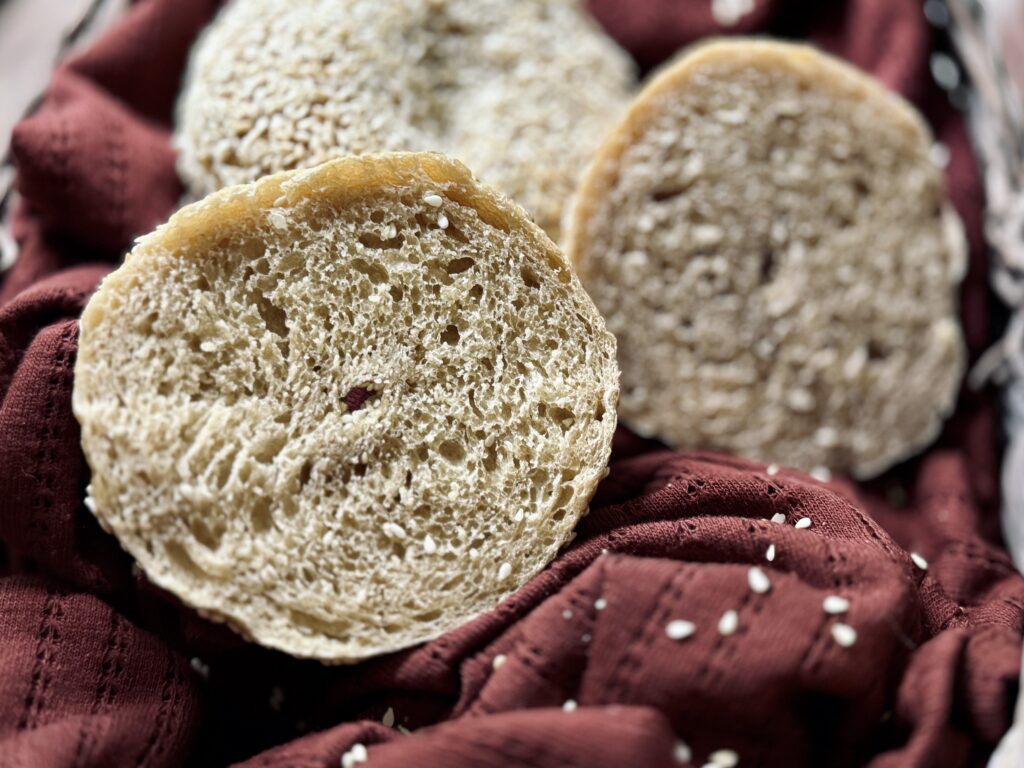
Try it: My bagel recipe uses this technique of osmotic stress in both the starter and the dough to create a sourdough bagel with a neutral flavor profile. Try making this recipe with and without the sugar, taking note of differences in flavor, texture, and fermentation speeds.
More Than 15%: Sugar High!
Adding over 15% (baker’s math) sugar to a bread recipe enhances sweetness, but also complicates fermentation. Adding large quantities of sugar suffocates yeast and slows bacteria, even up to the point of halting fermentation completely.
Usually, at this percentage, a larger amount of starter will have to be added to the bread dough to ensure a proper fermentation. In some cases, two doughs may even be made. This way, the sweet flavor of sugar can peak through, but the dough still has the ability to ferment (even if it is very slowly).
Proper fermentation combined with larger amounts of sugar leads to rich caramelization in the oven. While a darker color can occur with proper fermentation alone, added sugar, especially in this amount, only enhances the deep color of the crust.
Observe: Hawaiian rolls are one of the most difficult recipes to get right. That’s because the excess amounts of sugar added to the dough suffocate fermentation, creating a very slow moving dough. The baker must have a strong starter (and a lot of it!) to get the dough fermenting properly, otherwise fermentation is poor. You can tell if the rolls are well-fermented by their color. A light and airy Hawaiian roll will be darker in color, and the baker may even have to cover the rolls halfway through baking to prevent burning (like in my recipe!). Hawaiian rolls that are small and dense or light in color are likely not getting a quality fermentation. In fact, the rolls should darken well in the oven without any sort of egg wash. (This is a modification I’ve since made to my own recipe, as I used to believe sweet doughs had to have an egg wash.)
Try it: Try halving my recipe for Hawaiian rolls, making one batch as written and the other batch reducing the amount of starter by half. Notice the drastic effect on fermentation!
What Kind Of Sugar Should I Use?
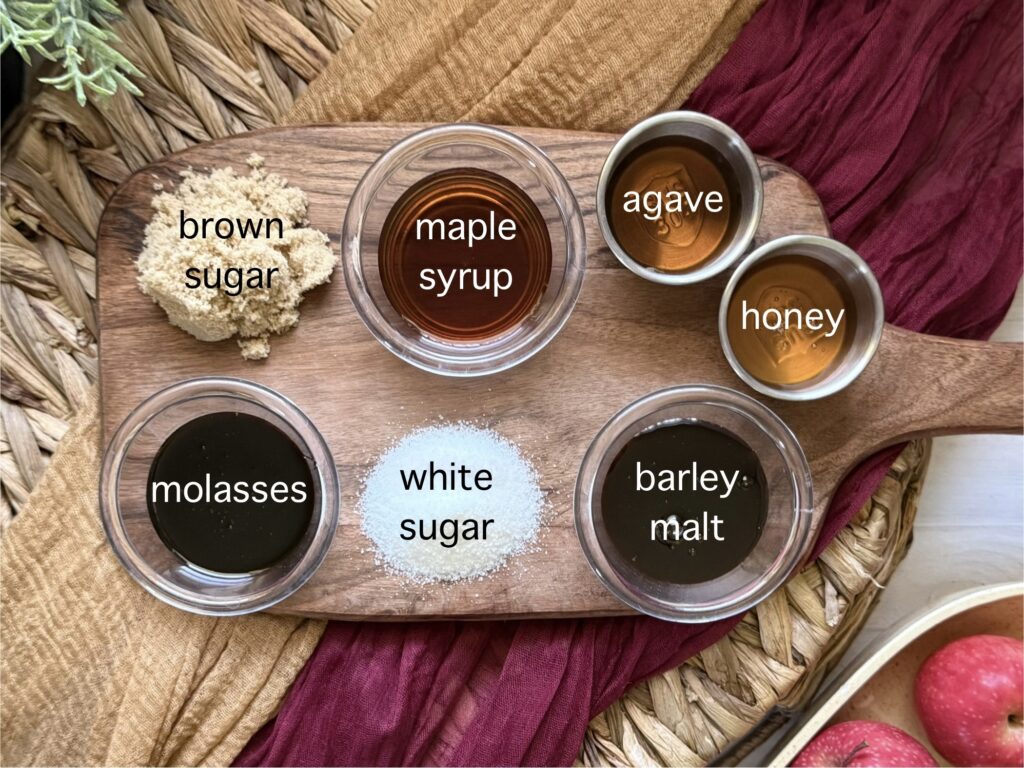
While all types of sugar have the same three effects mentioned above, each type of sugar will also have its own unique contributions to the final outcome of the dough.
You only need to use regular white table sugar to have any sort of effect. However, brown sugar, honey, molasses, maple syrup, barley malt, and more can usually be substituted 1:1 in any recipe calling for sugar. Sugars, like agave nectar, that tend to be sweeter than table sugar, can be used in even smaller amounts.
Liquid sugars, like honey and molasses, will also contribute to moisture and moisture retention of bread dough, possibly leading to a softer texture in the finished bread.
Sugars with a pronounced flavor, like molasses and barley malt, will change the flavor of the recipe.
Sugars composing of a higher percentage of fructose than sucrose, like agave nectar, can be fermented faster than sugars composed primarily of sucrose, like table sugar, which can speed up fermentation and microbial activity. This is because sucrose is composed of fructose and glucose, meaning sugars consisting primarily of fructose are already more broken down, which makes them even more readily digestible for yeast.
Conclusion
Sugar is not merely a sweetener in bread making; it is a vital ingredient that supports yeast fermentation, contributes to a deep, golden crust, and enhances flavor. However, sugar’s role is multifaceted, enabling yeast fermentation and acting as a sweetener, but also impacting fermentation depending on how much is used. Understanding this complexity is crucial for effective baking.